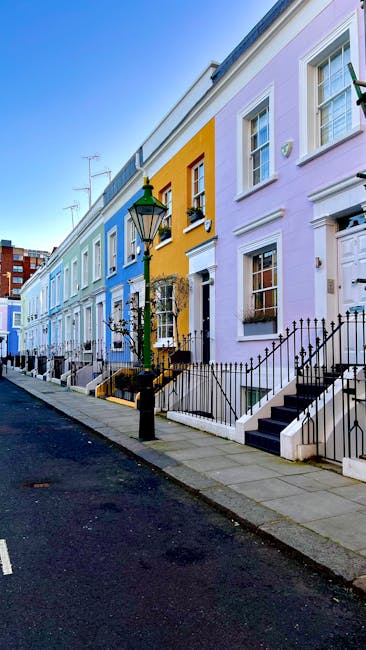
Handling Narrow Victorian Stairs in Notting Hill Moves: A Practical Guide for Safer, Smoother Removals
Moving through a Victorian townhouse in Notting Hill can feel a bit like a puzzle with awkward pieces. The staircase looks elegant, sure, but once you start carrying a sofa, a wardrobe, or even a mattress, the charm gives way to tight corners, shallow landings, and walls that seem determined to take a scuff. Handling Narrow Victorian Stairs in Notting Hill Moves is really about planning the move around those constraints so your belongings, the property, and the people moving everything all stay safe.
If you are preparing for a flat move, house removal, or just trying to work out whether a bigger item will fit, this guide walks through the realities, the practical steps, and the judgement calls that matter. It also covers the sort of details people often miss until the day itself. To be fair, those details are usually the ones that save the most stress.
For readers comparing services, it can help to look at broader options such as flat removals, house removals, or a more flexible man with van approach when access is tight. The right choice depends on your staircase, your furniture, and how much lifting the building will realistically allow.
Table of Contents
- Why Handling Narrow Victorian Stairs in Notting Hill Moves Matters
- How Handling Narrow Victorian Stairs in Notting Hill Moves Works
- Key Benefits and Practical Advantages
- Who This Is For and When It Makes Sense
- Step-by-Step Guidance
- Expert Tips for Better Results
- Common Mistakes to Avoid
- Tools, Resources and Recommendations
- Law, Compliance, Standards, or Best Practice
- Options, Methods, or Comparison Table
- Case Study or Real-World Example
- Practical Checklist
- Conclusion
- Frequently Asked Questions
Why Handling Narrow Victorian Stairs in Notting Hill Moves Matters
Victorian homes in Notting Hill have a particular character: tall ceilings, compact staircases, tight turns, and sometimes landings that seem designed for a smaller century. That layout is lovely on a Sunday morning. Less lovely when you are carrying a sideboard up two flights with a banister on one side and a hard wall on the other.
Narrow stairs affect almost every part of a move. They influence how items are packed, which furniture can be taken upstairs, how many people are needed, and whether something should be dismantled before moving day. They also affect the risk of scratches, dents, and awkward lifting injuries. Nobody wants a beautiful hallway marked by a clumsy turn with a chest of drawers. Nobody.
In Notting Hill, another factor is the mix of building styles. Some properties are period conversions with shared entrances; others are full houses with steep internal staircases; many flats are reached through communal hallways with limited space for staging. That means moving through the building is not just a physical task, it is a planning task.
Handled properly, a difficult staircase becomes manageable. Handled badly, it becomes the bottleneck that delays the whole day.
How Handling Narrow Victorian Stairs in Notting Hill Moves Works
The basic principle is simple: reduce risk before the item reaches the staircase. In practice, that means measuring, planning the route, protecting surfaces, and deciding whether the item should be moved as one piece or broken down first.
The process usually starts with an access check. A mover or homeowner looks at stair width, ceiling height, handrail position, landings, door swings, and any tight corners. Then they compare that space with the dimensions of the furniture or boxes. The critical question is not just "Will it fit?" but "Will it fit safely, without forcing it?"
From there, the move is staged in a sensible order. Smaller boxes go first or last depending on the layout. Bulky items are wrapped and protected. In some cases, two people carry an item using a controlled tilt. In other cases, one person guides from below and another from above. The choreography matters more than brute strength, truth be told.
When access is especially awkward, the plan may involve a smaller vehicle, parking coordination, or additional labour. Some customers also prefer to combine the move with packing and boxes or packing and unpacking services so the whole job is easier to organise around the staircase.
Key Benefits and Practical Advantages
Good staircase planning is not just about avoiding damage. It gives you a calmer, cleaner move overall. You will notice the difference pretty quickly, especially if the property is older and access is awkward.
- Less risk of damage: Items are less likely to be scratched, scraped, or bent on the way up or down.
- Safer lifting: Controlled handling reduces the chance of slips, strains, and misjudged turns.
- Faster progress: A clear plan avoids stop-start lifting and last-minute problem solving on the stairs.
- Better use of labour: Movers can work in the right sequence, instead of improvising around obstacles.
- More realistic expectations: You know early if an item needs dismantling or a different access route.
- Cleaner finish: Proper protection helps preserve paintwork, stair rods, bannisters, and original timber details.
There is also a confidence benefit. If everyone knows the plan, the move feels far less chaotic. And that matters when you are standing in a narrow hallway at 8:30 in the morning with half a house still to go.
Who This Is For and When It Makes Sense
This approach is for anyone moving in or out of a Victorian property with tight stair access. That includes first-time renters in split-level flats, families moving out of terraced houses, landlords preparing a re-let, and anyone shifting heavier furniture into a higher floor property.
It makes particular sense when you have one or more of the following:
- a sofa with a rigid frame
- a mattress that needs bending through a turn
- a wardrobe, bookcase, or ottoman bed
- a property with a narrow staircase and no lift
- shared entrances where timing matters
- valuable or fragile items that should not be dragged or tilted carelessly
It is also worth thinking about this if you are comparing service levels. Sometimes a straightforward van and two movers is enough. Other times, the access alone suggests a more experienced team, perhaps one that regularly handles removal services or even a dedicated removal van for a leaner, access-focused job.
If you are moving a small load, a student flat, or just a couple of rooms of furniture, it can still make sense to plan carefully. Small move, same staircase problem. The stairs do not care how many boxes you have.
Step-by-Step Guidance
Here is a practical way to approach narrow Victorian stairs without turning moving day into a wrestling match.
- Measure the staircase and the items. Record the narrowest point, the landing width, and the item dimensions. Measure height as well as width. Height is often the detail people miss.
- Identify awkward turns. Look for staircases with tight bends, low ceilings, or radiators that reduce clearance.
- Decide what must be dismantled. Beds, table legs, shelving, and some sofas can often be broken down in advance. Keep screws and fittings in labelled bags.
- Protect the route. Use coverings for bannisters, walls, and flooring. Even a careful move can leave scuffs if the route is tight.
- Plan the load order. Move items in a sequence that avoids blocking the staircase. Smaller boxes should not pile up at the base of the stairs.
- Assign roles. One person leads, one supports, and one watches for snag points. Too many people crowding the stairwell can make things worse.
- Test large items before the full move. If there is doubt, try the item early while everyone is fresh, not after an exhausting hour of lifting.
- Have a fallback option. If a piece will not turn safely, stop and reassess rather than forcing it. That tiny pause can save a lot of repair work.
There is no magic trick here. It is a sequence of small, sensible decisions. But small, sensible decisions are exactly what keep the move on track.
Expert Tips for Better Results
Most of the trouble with Victorian stairs comes from underestimating angles. An item may be technically shorter than the stair width, yet still impossible to turn because of handrails, ceiling slope, or landing geometry. So think in three dimensions, not just a tape measure on a flat floor.
Tip one: remove loose parts before the movers arrive. Cushions, doors, drawers, feet, shelves, and mirrors all add awkwardness. A five-minute bit of prep can save twenty minutes of faffing later.
Tip two: wrap corners carefully. Cardboard edge guards and padded blankets are especially useful around bannisters and the sharp edge of a newel post. That old timber may have already seen a century of use; it does not need your sofa adding to its story.
Tip three: avoid rushing the first big item. If the sofa or wardrobe goes well, the rest often feels easier. If it goes badly, the day becomes a bit tense. Better to build confidence early.
Tip four: keep communication short and clear. "Lift," "pause," "tilt," "stop" are better than long instructions shouted across a landing. Everyone hears the same thing, and no one needs a mini lecture in the stairwell.
Tip five: if you are unsure, ask for an assessment in advance. A proper access conversation before move day is much more useful than guessing. It helps the team decide whether extra labour, a different vehicle, or additional packing support is sensible.
For some moves, the wider service offer matters too. If the move includes larger furniture, you may want to combine the stair plan with furniture removals, or arrange responsible disposal via furniture pick up if something is not worth carrying up or down the stairs at all.
Common Mistakes to Avoid
There are a few repeat offenders when it comes to difficult stair moves. They show up again and again.
- Skipping measurements: People rely on eye-balling the staircase, which is brave but not wise.
- Leaving dismantling too late: Taking apart furniture on move day slows everything down.
- Underpacking boxes: Overstuffed boxes are awkward to carry and easier to lose grip on.
- Not protecting walls: Even careful movers can brush plaster or paint in a narrow stairwell.
- Blocking the landing: If boxes and bags pile up, the route becomes unsafe fast.
- Trying to force oversize items: Sometimes the answer is not "push harder." Sometimes it is "change the plan."
- Ignoring parking and access timing: In Notting Hill, access can be as important as the staircase itself.
One more thing. Do not assume the first floor is easy just because it is "only one flight." A Victorian staircase can be short and still awkward enough to cause problems. That catches people out all the time.
Tools, Resources and Recommendations
You do not need a warehouse of equipment, but a few well-chosen tools make a noticeable difference.
- Furniture blankets: Good for wrapping corners and protecting decorative surfaces.
- Ratchet straps or lifting straps: Useful for securing bulky items, provided they are used correctly.
- Gloves with grip: Help reduce slipping, especially on smooth painted surfaces or wrapped items.
- Cardboard corner protectors: Handy for walls, doors, and bannisters.
- Labels and marker pens: Keep hardware and dismantled parts organised.
- Floor coverings: Particularly useful if rain has followed you in from the street. London weather does enjoy timing itself badly.
For planning, it also helps to review general service information such as removals, removal companies, and removal truck hire so you can match the vehicle and manpower to the access problem. If your move is smaller or more flexible, a simple man with a van arrangement may be enough. If it is more complex, a more structured moving setup may be better.
And if you are moving from a shared building, a quick read of the company's health and safety policy and insurance and safety pages can offer useful reassurance before you book. Not glamorous, but sensible.
Law, Compliance, Standards, or Best Practice
For most domestic moves, the practical side matters more than any one legal detail, but good movers still work within recognised UK expectations around health and safety, manual handling, and property care. That means using safe lifting methods, assessing risks before moving heavy items, and not creating avoidable hazards in shared spaces.
If you are a tenant, landlord, or managing agent, it is also wise to think about building rules and neighbour impact. Shared hallways, stairwells, and communal entrances often need careful timing. In some buildings, you may need to avoid busy periods or make sure access is kept clear for others. Exact requirements vary, so it is best to check the property's own instructions rather than assuming.
From a best-practice standpoint, look for the following:
- clear communication before move day
- realistic assessment of access and item size
- use of protective materials where needed
- careful manual handling and team coordination
- insurance coverage that matches the type of move
- transparent terms and payment conditions
Useful support pages on the same site include terms and conditions, payment and security, and pricing and quotes. Those pages are not about staircases specifically, but they matter when you are deciding how to book and what level of service you want.
Options, Methods, or Comparison Table
There is more than one way to handle a difficult staircase. The right method depends on furniture size, property layout, and how much you want to do yourself.
| Method | Best for | Advantages | Limitations |
|---|---|---|---|
| Careful DIY move | Small loads, light furniture, confident movers | Lower cost, full control | Higher physical strain, more risk on tight turns |
| Man and van | Smaller moves, flexible access, lighter household contents | Good for short-notice or compact moves | May still need careful planning for large items |
| Full removal service | Heavier loads, multiple rooms, complex access | More support, better coordination, less lifting for you | Usually more expensive than a minimal setup |
| Packing plus removals | Busy households, fragile items, time-sensitive moves | Fewer mistakes, cleaner staging, better protection | Requires more planning and service coordination |
In real life, the best option is often the one that reduces decision fatigue. If you have a steep staircase, a sofa that does not like turning corners, and a small time window, paying for more support can be the calmer choice. Not always the cheapest, but often the smoother one.
Case Study or Real-World Example
Imagine a move from a top-floor Victorian flat in Notting Hill with a narrow stairwell, a long two-seat sofa, a bed frame, and several medium boxes. The hallway is compact, the turn at the half landing is tight, and there is barely enough room for two people to pass.
The sensible approach is to assess the sofa first, before the rest of the load is touched. The bed frame is dismantled in advance, the headboard wrapped separately, and the boxes are grouped so the staircase is never cluttered. On the day, one person guides from the bottom while another controls the angle from above. Soft materials are protected with blankets, and the turn is taken slowly, with a pause at the landing to re-angle the item.
The key moment is not dramatic. It is that quiet pause halfway up, when the team adjusts the sofa by a few inches and everything suddenly makes sense. That is the sort of detail people do not see from the street, but it is exactly where experience helps.
If the sofa had not fitted, the backup would have been to leave it out rather than force the turn. That is not failure. That is good judgement.
Practical Checklist
Use this before move day. It keeps the process grounded and saves last-minute panic.
- Measure the stair width, landing space, and ceiling clearance
- Measure large furniture in its widest points
- Confirm whether items can be dismantled
- Remove loose parts, cushions, shelves, and drawers
- Protect bannisters, walls, and floors
- Keep the stairs clear of bags and spare boxes
- Check access, parking, and timing for the vehicle
- Label fragile items clearly
- Decide in advance what will not be moved upstairs
- Review the mover's booking terms, safety information, and pricing details
Expert summary: the safest narrow-stair move is usually the one that feels slightly over-planned. That is a good thing. A little extra preparation on a Victorian staircase pays for itself quickly, especially in older Notting Hill buildings where every turn seems to have an opinion.
Conclusion
Handling Narrow Victorian Stairs in Notting Hill Moves is really about respecting the building as much as the move. When you measure carefully, protect the route, choose the right lifting method, and accept that some items need dismantling or alternative handling, the process becomes far less stressful.
The best moves are not the ones that look effortless from the outside. They are the ones where the planning did the heavy lifting long before the first box reached the stairs. If you are moving in or out of a period property, that calm preparation can make all the difference.
If you are still comparing options, consider the scope of the job, the size of the items, and the level of support you want. A thoughtful service choice now can save you a lot of scrambling later, and honestly, that is worth a lot on moving day.
Get a free quote today and see how much you can save.
Frequently Asked Questions
How do you move furniture up narrow Victorian stairs safely?
Start by measuring the staircase and the furniture, then dismantle anything that can be broken down. Use protective coverings, assign clear roles, and move slowly through the turns. If the item cannot be turned safely, stop and reassess rather than forcing it.
What types of furniture are hardest to move on Notting Hill staircases?
Large sofas, wardrobes, bed frames, bookcases, and any rigid item with awkward depth are usually the hardest. Items with wide arms or fixed corners tend to struggle most on tight landings.
Should I dismantle furniture before a Victorian flat move?
Usually, yes, if the item is designed to come apart and doing so will make the move safer. Beds, table legs, shelving, and some wardrobes are common candidates. Keep all hardware together and label it clearly.
Is a man and van service enough for narrow stairs?
Sometimes it is, especially for smaller moves or lighter furniture. For larger items or multiple rooms, you may need more labour and a more detailed access plan. The staircase itself often decides this more than the postcode does.
How can I protect the walls and bannisters during the move?
Use furniture blankets, cardboard corner guards, and floor coverings where needed. Keep the route clear and avoid crowding the stairwell. A little protection goes a long way in older properties.
What should I measure before moving day?
Measure the narrowest part of the stairs, landing width, ceiling height, and the full dimensions of larger items. It helps to check the depth and turning angle too, not just the width. That extra detail is often the difference between fit and no-fit.
What if my sofa or wardrobe will not fit up the stairs?
Do not force it. Consider dismantling, taking a different route if available, or replacing the item if that is more practical. Forcing bulky furniture through a tight turn is one of the quickest ways to damage both the item and the property.
Do Victorian stairs make moves more expensive?
They can, because narrow access often requires extra time, more care, or additional labour. The exact cost depends on the size of the load, the level of access difficulty, and whether packing or dismantling is needed.
How early should I book for a Notting Hill move with tricky stairs?
As early as you reasonably can, especially if the building access is awkward or the move date is fixed. Early booking gives you time to assess measurements, confirm parking, and organise any dismantling or packing support.
Can I move heavy items on my own up narrow stairs?
You can, but it is not usually the best idea for bulky or valuable furniture. Narrow Victorian stairs are unforgiving. If the item is heavy, awkward, or fragile, extra help is usually the safer choice.
What makes a stairwell difficult beyond just width?
Landings, ceiling height, handrail position, wall projections, radiator placement, and door openings all affect how an item moves. A staircase can look manageable until you try to turn a large item on the landing. That is where most surprises happen.
Where can I find more information about booking and safety?
You can review the service provider's pricing and quotes, health and safety policy, and insurance and safety information before making a decision. Those pages help you understand what to expect and how the move is handled behind the scenes.